


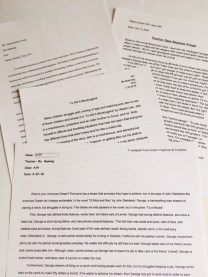
Writing occurs in all forms: reflective journal writing, written responses to open response prompts, long compositions (inform/explain and argument) and research papers.
SophomoreResearchWritingProjectPacket
MultiParagraphArgumentativeEssayDirections
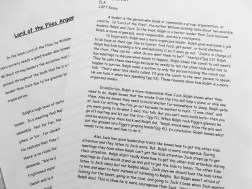
StudentSampleLordofFliesArgumentEssay
Based on this submission, this student’s corrective feedback involved spiraling back to the elements of an argument essay, in particular the need for a counterclaim. It also involved reteaching of the MLA format.
StudentSample #2LordoftheFliesArgumentEssayThis sample was submitted by a student with a language-based learning disability. He included all elements of an argument essay and he was able to adequately follow MLA format. His corrective feedback involved grammar, as well as traditional and digital proofreading strategies and resources, such as checklists and grammarly.com.
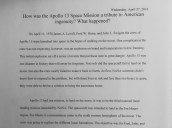 MiddleSchoolStudentResearchEssayWritingSample
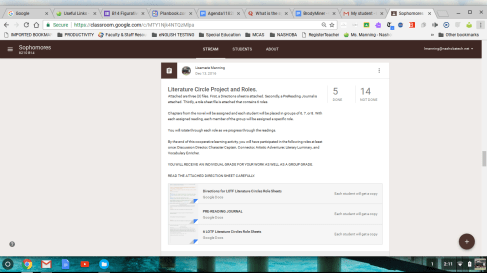
Directions for Literature Circles
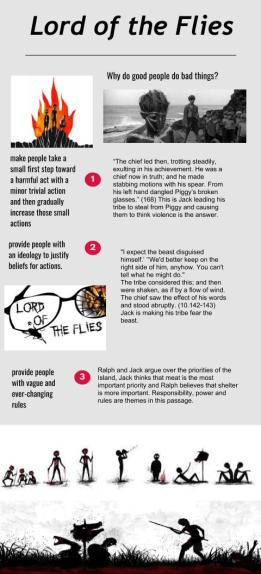
Thematic analysis of evil in the novel “Lord of the Flies” by William Golding through the creation of an infographic. Students read the article “Why Do Good People Do Bad Things” on CommonLit and then synthesized the criteria needed for a descent into evil with the events and characters in the novel.

Students create digital plot synopses via StoryBoardThat of Richard Connell’s short story “The Most Dangerous Game.”
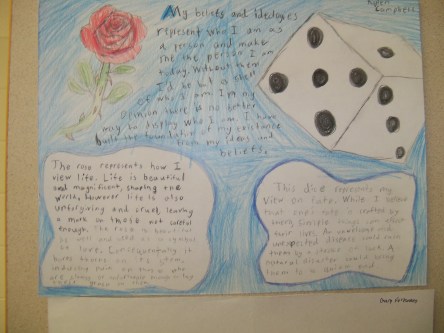
Anticipatory symbolism exercise for Laurie Halse Anderson’s “Speak.”
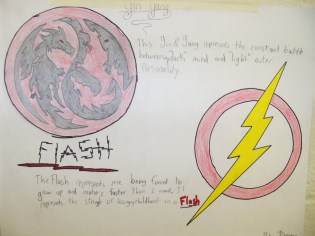
Another student’s symbol submission.
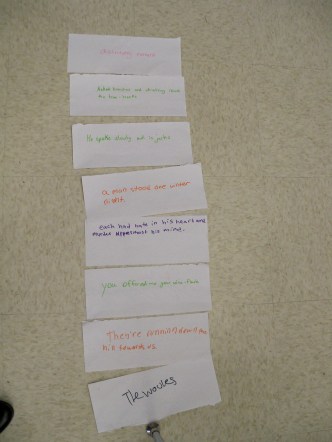
Students create found poems following the reading of “The Interlopers” by Saki.

Student interpretations of the Soledad Bunkhouse in the novel “Of Mice and Men” by John Steinbeck. A component of studying setting as it relates to mood in works of literature. Students closed their eyes and listened to the author’s description, visualized the bunkhouse and then produced their interpretations.
 Lisamarie S. Manning --Dual Certified MA Educator